Soil health was something that Stuart Johnson never used to think about. However, just over 10 years ago he and his family began using strip-tillage in a drive to save money.
It was the beginning of a transition to regenerative farming practices at West Wharmley Farm, which Stuart runs alongside his father Richard, brother James and mum Rosi.
Savings since Stuart has adopted regenerative practices:
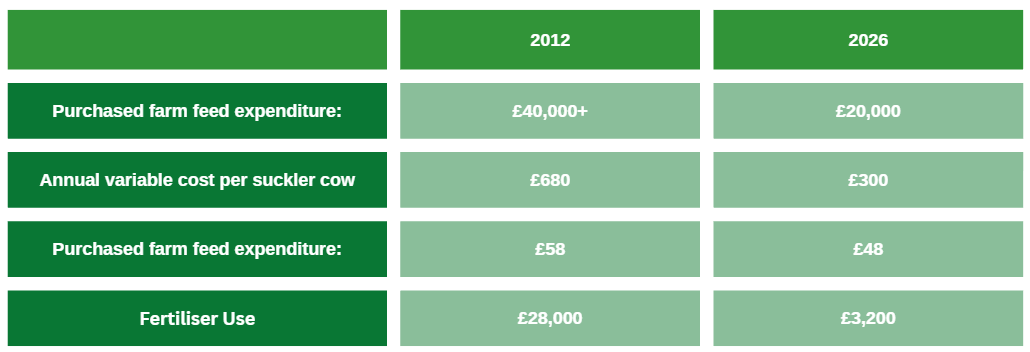
Since then they have massively reduced the farm’s reliance on fertiliser, chemicals and other external inputs, while increasing its resilience to changes in the weather and the economy. And Stuart now supports other farmers do the same. As a Regenerate Outcomes soil health mentor, Stuart works with farmers across the UK to help them grow profits and increase crop and livestock performance by building healthy soil.
Reducing inputs to increase profits
"Back in 2011 we were a 540-acre high input, mixed farm with maybe 150 to 200 acres of arable. We used fertiliser. We used chemicals. We fed large amounts of grain as feed. We used all inputs we thought could help improve our yield.
“We never really thought about the soil at all. I think I once said to my dad that it didn’t matter because the crops only grow in the top two inches anyway. That was my take on it back then.
"As fifth generation tenant farmers, we don't necessarily have the land behind us that a lot of landowners have. We have to pay the bills and still always have a rent to pay, so this drives us to keep looking at how we can save money while increasing profit margins.
"In 2012 we decided that the best way to cut establishment costs would be to stop ploughing and start using strip-tillage. We did that for four or five years, still using our conventional inputs alongside. It became clear it was working in some places but not others and we couldn't quite put our finger on why that was.
‘We have to pay the bills and still always have a rent to pay’
In 2012 we decided that the best way to cut establishment costs would be to stop ploughing and start using strip-tillage. We did that for four or five years, still using our conventional inputs alongside. It became clear it was working in some places but not others and we couldn't quite put our finger on why that was.
Using regenerative farming principles
“I had followed Gabe Brown’s and Allen Williams’ work for a few years, and in about 2019 I came across the Understanding Ag 6-3-4 principles.
“Now most of my decision making takes place around them. We are still producing high quantities of produce. We’re still production farmers and we’re still farming, we’re just trying to do it in a slightly different way.
“We used to be set-stocked everywhere and generally we turned the stock out and they would just stay in the same few fields. Now we mob graze everything and we move everything every day or maybe every other day.
“We’ll graze but then we might leave it for 50 or 60 or even 100 days before we come back again. It depends what the field is like. If it’s been really badly damaged a bit of rest helps. We carry as much stock now as we did before without the fertiliser, without the inputs we used before, just using the cows and the sheep to cycle those nutrients.
Moving from set stock to mob grazing
“I used to have a 500-acre farm and six batches of cattle and then I would drive around the whole farm pretty much every day to go and see the cattle. Now we try to have just two batches of cows and checking them doesn’t actually take any longer.
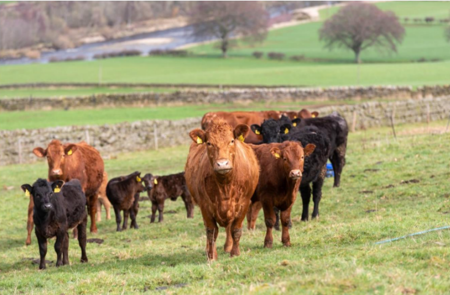
“I think the time we're spending is probably more quality time with animals, which I really enjoy.”
“We just go to mob one, check them, move a bit of an electric fence and spend a bit more time there observing. I think the time we're spending is probably more quality time with animals, which I really enjoy.
Cutting costs by outwintering livestock
“We have changed breeds because we’re trying to outwinter all the time and we’ve designed a system that allows us to outwinter on tall grazing grasses.
“We are trying to keep the cows out and reduce all the expensive points throughout the year. Bringing them in is expensive, running machines to keep them in is expensive, getting the muck out is expensive, so if we can keep them out as long as possible that keeps our costs down.
“The cattle are outwintered until the back end of January. We calve in February and then put them back out again in March onwards. We used to hate our stony ground, but it’s actually quite good at carrying cattle so we can get away with turning them out slightly earlier.
“We are also transitioning to more forage-bred sheep and we now have about 80 acres of arable whereas previously we were at 160 acres. We don’t really need it all because we’re not feeding as much anymore, so we can keep reducing it.
Benefits for soil, plant and animal health
“We initially put 90 acres of herbal leys in under a five-year stewardship scheme. At the end of the five years we put in 220 acres because we found it so much more productive.
“It was unimaginable to think that we were going to be planting fennel in our grassland 10 years ago. We now have seven herbs that go into our sward and they all do different jobs and have helped reduced the livestock vet and med.
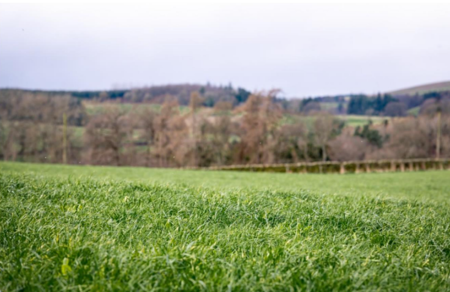
“We haven’t applied any bagged P and K for the last six years and no fungicide or pesticide for the last four years.”
“We haven’t applied any bagged P and K for the last six years and no fungicide or pesticide for the last four years. Our nitrogen application has vastly decreased. We used to use 70 to 80 tonnes of fertiliser per year. We’ve used less than 10 for the last two.
"We're more resilient to the price changes and the weather extremes and we've reduced nearly all the variable costs, without over sacrificing yield.
Stuart Johnson is a Regenerate Outcomes soil health mentor. Regenerate Outcomes rewards farmers for healthier soils through soil carbon baselining and high value carbon credits, alongside farmer-led soil health mentoring. All services are provided at no upfront cost and Regenerate Outcomes retains a share of credits in return.